Tracy Beerley, The McCausland Natural Lands Horticulturist
On your next visit to the Morris Arboretum's wetlands be sure to listen and look carefully for these creatures in disguise.

Friday, April 20, 2012


Monday, April 16, 2012
Native Flowering Trees in the Natural Areas
Tracy Beerley, The McCausland Natural Lands Horticulturist
Vibrant spring colors in the Natural Areas of the Arboretum. 
.JPG)
Cornus florida 'Cherokee Princess,' flowering dogwood. This small tree is an important understory species in many eastern deciduous forests, its habitat also includes thickets, streams, wood edges and dry uplands. There are many varieties of the native dogwood which select for different characteristics such as resistance to powdery mildew and anthracnose.
Wednesday, April 4, 2012
Wetlands - high in the sky, low on the ground
Tracy Beerley, Natural Lands Horticulturist
A raptor soars overhead, high in the sky, this bird is lurking for its prey. Low on the ground signs of spring continue to emerge.
A raptor soars overhead, high in the sky, this bird is lurking for its prey. Low on the ground signs of spring continue to emerge.
Thursday, February 2, 2012
The Newly Released USDA Plant Hardiness Zone Map Marks a Change for Philadelphia’s Hardiness Zone
The USDA has released a new Plant Hardiness Zone Map and the results indicate marked changes and warming trends for the Philadelphia area. The USDA Plant Hardiness Zone Map is the standard by which gardeners and growers determine which plants are most likely to thrive at a given location. The map is based on the average annual minimum winter temperature, divided into 10-degree Fahrenheit zones. The map is an important tool for the country’s estimated 80 million gardeners, as well as those who grow and breed plants for them.
The last update to the Hardiness Zone Map occurred in 1990 using data from a 13-year period (1974-1986). The most recent update utilized a broader data set (1975-2005). The resulting information saw approximately a one half zone change across most of the Philadelphia region. Anthony Aiello, the Gayle E. Maloney Director of Horticulture and Curator at the Morris Arboretum served on the Technical Advisory team for the USDA team responsible for revising the map. The team was comprised of nursery professionals and experts in the scientific and public garden communities who evaluated the zones in their specific geographic areas.
The implications of the study for Delaware Valley gardeners are significant. On the positive side, the increase in zone allows for an expanded palette of plants that gardeners can reliably grow in this area. Some of these include traditional southern favorites such as crapemyrtle, southern magnolia and Japanese camellia. Today, plants such as these should grow reliably in Philadelphia. However, Paul Meyer, the F. Otto Haas Director of Morris Arboretum cautions, “Like financial investments, recent past performance may not necessarily predict future performance.”
Unfortunately, there is also a down side to the new information as well. The data solidifies the reality of climate change, suggesting even greater unpredictability with regard to future weather patterns and environmental conditions. Additionally, warmer temperatures in the colder months also lead to further pest and disease problems, as both are better able to survive in mild winters. Lastly, just as plants such as lilacs do not thrive in the south, plants at the southern limits of the Philadelphia zone may eventually be negatively impacted to the point where they will no longer be able to be grown in this area.

These are all very practical examples of how shifts in temperature, especially warmer winter temperatures, have a dramatic impact on how we garden, what we plant, and what will thrive in our gardens.
This winter has shown above average temperatures as well causing some confusion in local gardens. “A lot of our plants are coming out exceptionally early this year,” explains Paul Meyer, Executive Director of the Morris Arboretum. “I live on the grounds of the arboretum, and I’ve had a few early varieties of daffodils blooming for the past two weeks.”

Meyer says the warmth has not pushed native trees to break dormancy, but some non-native shrubs are blooming early, like Chinese witchhazel.
Much as many people embrace the warmer weather, there is no certainty that it will last. Meyer cautions that like the stock market and its unpredictable volatility, so it is with the weather. We may see some traditional winter conditions with colder temperatures and snowfall yet.
Tuesday, August 30, 2011
Morris Arboretum Interns visit Brooklyn Botanic Gardens
Last week, the Morris Arboretum Interns, led by Director Paul Meyer, got the chance to take a "behind the scenes tour" with Brooklyn Botanic Garden's president, Scot Medbury.
Brooklyn Botanic Garden (BBG), bordered by Prospect Park, is unique in that it is one of the few green spaces in a highly populated, very urban Brooklyn. We learned that if Brooklyn were not part of New York City, it would be the fifth most populated city in the United States. BBG is a beautiful garden, about half the size of Morris Arboretum and is closely integrated with the surrounding community in a number of different programs from GreenBridge, the community environmental horticulture program, to working with nearby schools.
 We learned a little bit about some of the research being done in the labs at BBG from Susan Pell, Ph.D, director of Science at Brooklyn Botanic Garden. She told us about the New York Metropolitan Flora project (NYMF), a multi-year effort to document the flora in all counties within a 50-mile radius of New York City. We were also able to visit Paul Harwood at the herbarium, learn about collecting and look at type specimens.
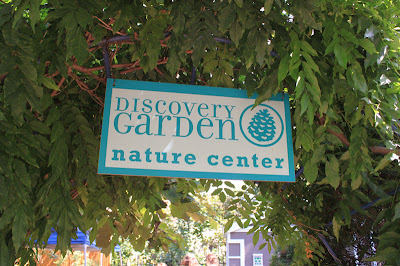
BBG also has a very engaged educational department. They partner with nearby community schools, bringing students into the Discovery Gardens and educational greenhouse, pictured below, for classes. We were fond of the hydrolic table that would raise and lower according to the height of participants from small children to adults.

 We were thrilled to see that Brooklyn Botanic Garden has a sculpture by Patrick Dougherty, called "Natural History". Morris Arboretum also had a much loved sculpture by Patrick Dougherty, called Summer Palace, that was constructed in April 2009 but was recently dismantled.

Thanks to Brooklyn Botanic Garden for a great visit. Here are a few more pictures:


 |
| President Scot Medbury welcoming the Morris Arboretum Interns |
Brooklyn Botanic Garden (BBG), bordered by Prospect Park, is unique in that it is one of the few green spaces in a highly populated, very urban Brooklyn. We learned that if Brooklyn were not part of New York City, it would be the fifth most populated city in the United States. BBG is a beautiful garden, about half the size of Morris Arboretum and is closely integrated with the surrounding community in a number of different programs from GreenBridge, the community environmental horticulture program, to working with nearby schools.

 |
| Type specimen from herbarium |
BBG also has a very engaged educational department. They partner with nearby community schools, bringing students into the Discovery Gardens and educational greenhouse, pictured below, for classes. We were fond of the hydrolic table that would raise and lower according to the height of participants from small children to adults.


Thanks to Brooklyn Botanic Garden for a great visit. Here are a few more pictures:


Friday, June 17, 2011
Garden Railway's Painted Ladies
Every year, the Garden Railway has a different theme. This year's theme is "Painted Ladies," colorful miniature replicas of Victorian homes, seen in cities across the country. This fabulous architectural style began in San Francisco after the Gold Rush when homes were built in a glorious mix of Carpenter Gothic, French Renaissance, Queen Anne, and others embellished with flashy scrolls, fans, and rosettes on porches, balconies, cornices, towers and turrets.

It is a joy to come out to the Morris Arboretum and see families - anywhere from small children to older adults - enjoying the display. The trains are quite impressive but the miniature world they operate in is even more awesome. There is about a quarter mile of track woven between the miniature houses that are part of the "Painted Ladies", but also the permanent miniature series of well loved Philadelphia buildings (like the Betsy Ross House or Elfreth's Alley or Independence Hall), across really cool natural bridges and tunnels.

Walking through Garden Railway a few days ago, I heard several different people calling their family and friends to tell them that the Garden Railway was at Morris Arboretum and they should really bring their family out to see it. It is a perfect activity for anyone who loves the outdoors, loves trains, loves Philly or just loves a good time...Enjoy some pictures:


Wednesday, May 11, 2011
Animals at the Morris Arboretum
Morris Arboretum has a lot of beautiful plants in bloom right now. But when you walk around the garden, it is easy to see that a lot more than plants live at the Arboretum. There are plenty of animals that you will see and hear as you enjoy the gardens. Ducks and geese are easy to see by the wetlands (and you may be lucky and see a fox or a hawk or heron). Squirrels and chipmunks can be seen scrambling across the paths. Birds are also prolific and you will likely see robins, orioles, warblers, catbirds, wrens, cardinals, red-winged blackbirds and more. These are just a few animals that I saw during my walk this afternoon.
If you are interested in birding, there are some great birding classes that you can take here at the Morris Arboretum. These classes build appreciation for nature and can help you identify birds that live or migrate through the Arboretum. Browse our classes offered here.


If you are interested in birding, there are some great birding classes that you can take here at the Morris Arboretum. These classes build appreciation for nature and can help you identify birds that live or migrate through the Arboretum. Browse our classes offered here.


Subscribe to:
Posts (Atom)